Rich Task #2
Inference is what we do when we make conclusions based on information that has been implied (hinted at) rather than directly written in the text. It is an essential skill in reading comprehension. I depend on it every time I tell an awesome joke! When I have to explain the joke so that you ‘get it’, it means I have failed to have you make an inference.
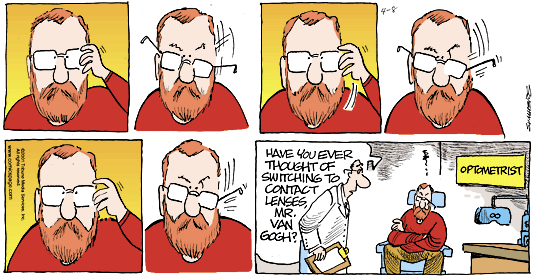
Why is this (or isn’t this) cartoon funny?
Making an inference involves you using clues from the text, tapping into what you already know and using this to figure out what the author is trying to say.
The ‘already know’ part was very important to the joke in the cartoon above. Van Gogh was a famous painter who went a little crazy from drinking too much, he cut off his ear and sent it to his lady friend. Now revisit the cartoon. Did it change the way you inferred? Here is some of Van Gogh’s famous work.


People make inferences every day, both in oral and written communication. This is so automatic that most of us don’t even realize the information wasn’t included in the conversation or text. For example, read the following sentences:
All of the sudden we hear a loud ’THWAKKK’ and the ball sails over the fence. Everybody goes wild. We put our chins down and quickly head for the exit.
You can assume a great deal of information from these sentences:
- they are at a baseball game
- somebody just hit a home run
- the game just ended
- there is a lot of people happy
- the ‘we’ are not all that happy about it
- they feel uncomfortable/sad/flighty
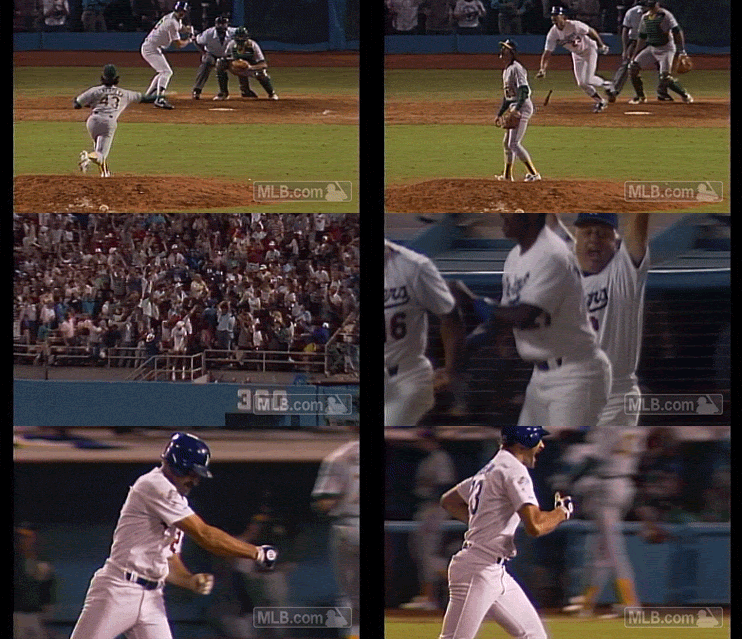
This information was not clearly stated in the sentences, but you can use what was written to conclude or infer much more than what was said. Most of the information we get from reading comes from what is implied rather than direct statements, as you can see from the amount of information available by reading between the lines. It is through inferences that words take on meaning.
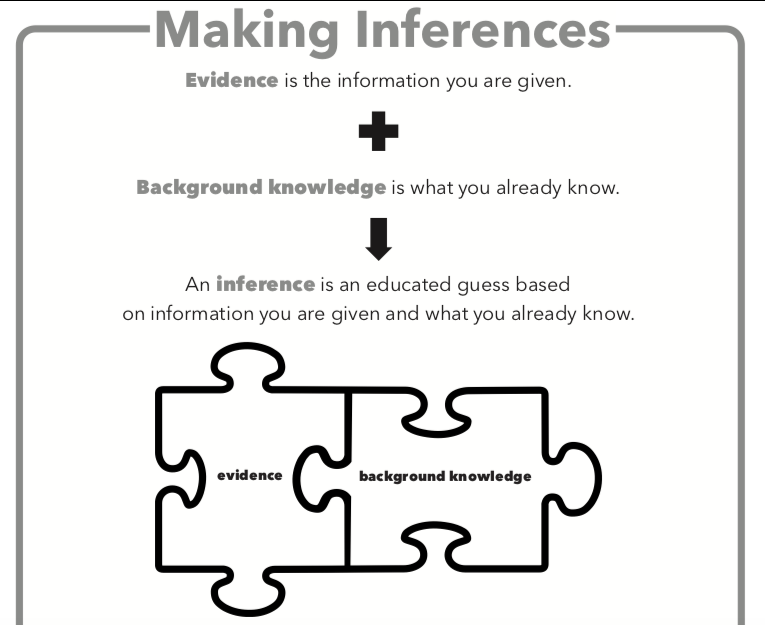

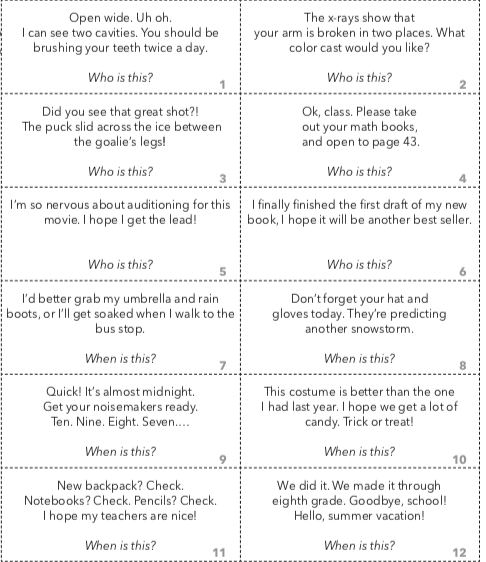
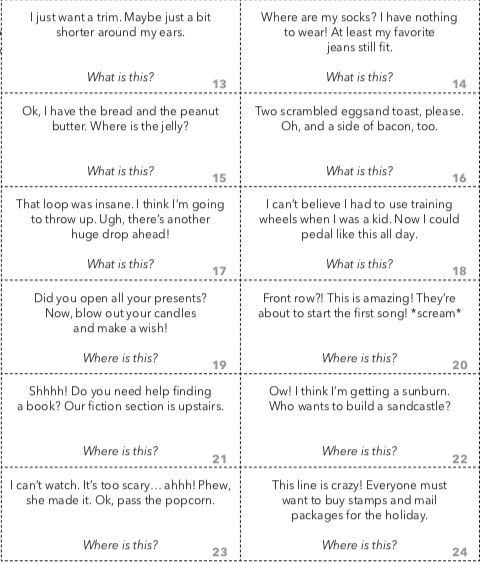
It is your turn to make some inferences. Read the numbered texts below and use the following text boxes to make your conclusions:


 Education and Innovation